
Reverse Osmosis Drinking Water in Lafayette, LA
Better tasting water at the kitchen sink
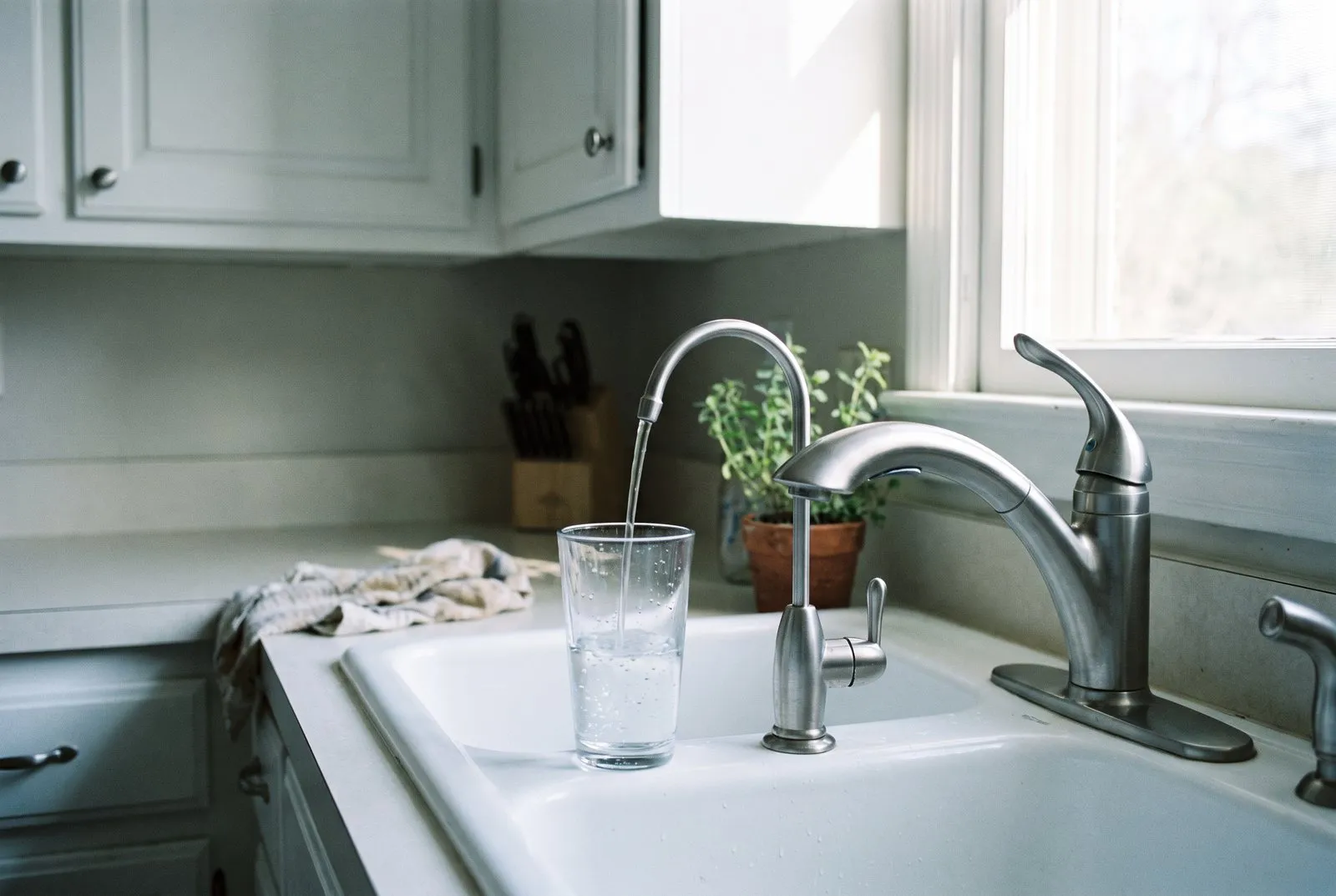
A reverse osmosis system adds a small dedicated faucet to your kitchen sink that gives you filtered water for drinking, cooking and ice. It is for Lafayette and Acadiana homeowners who want better taste at one tap, whether or not they filter the rest of the house. The free in-home water test is where we begin.
You might notice
- A taste or smell in your drinking water that you would rather not have
- Ice cubes that taste flat
- Coffee, tea or cooking that tastes different from one house to the next
- Spots on glasses even after a rinse
- Buying jugs to get water that tastes better
One tap, filtered further
Reverse osmosis works at a single tap. Water from your line is pushed through a very fine membrane under pressure, and what comes out the other side goes to a small faucet mounted next to your kitchen faucet. The rest of the house keeps running on whatever you already have. That makes it a good fit for the water you drink and cook with, and for ice. Coffee, tea and soup are where most people hear the difference first.
What is under the sink
Most of the equipment lives in the cabinet below the sink. Water passes through prefilters first, usually sediment and carbon, which protect the membrane and take care of taste and smell. Then it goes through the membrane itself. Many systems also keep a small storage tank so water is ready when you turn the tap on. Reverse osmosis sends some water to the drain while it is filtering, which is how it carries away what the membrane holds back.
The small faucet is the part you will see. It sits on the sink deck or counter next to your regular faucet, and it is the only tap the system serves. If you want ice from the same water, ask about connecting the refrigerator line, since it depends on your kitchen.
How we work out what you need
Reverse osmosis is not always the answer, and it pairs well with other equipment. The in-home water test checks hardness, chlorine, iron and pH. If your water is hard, a softener ahead of the system helps protect the membrane. If you simply want better taste at the sink, a reverse osmosis system on its own may be all you need. We would rather match the equipment to the result than sell you more than the water calls for.
Installation and upkeep
Licensed plumbers from Hargrave's Plumbing drill for the faucet, connect the supply and drain lines, and set the system up under the sink. After that, the prefilters and the membrane are the parts that get replaced, on a schedule that depends on your water and how much you use. The prefilters usually come due before the membrane does, and a change in taste is the usual sign that something is spent.
Questions
Reverse Osmosis: common questions
Does reverse osmosis waste water?
Some water does go to the drain while the system filters. That is how the membrane gets rid of what it holds back. We can walk you through what that looks like for your system.
How much room does it need?
Usually the space under the kitchen sink, plus a spot on the counter or sink deck for the small faucet. We check the cabinet before recommending a layout.
Do I still need a filter or softener for the rest of the house?
Not necessarily. Reverse osmosis treats one tap. Whether the rest of the house needs anything depends on your water, which is why we test first.
Will it lower my water pressure?
It only serves its own small faucet, so your other taps are not what it works on. The drinking-water tap flows more slowly than a regular faucet, and that is normal for this kind of system.
Book a free in-home water test first
The result tells us what your water needs, and what it does not. If it tests fine, we will tell you so.