
Water Softeners in Lafayette, LA
Soft water from every faucet
A water softener removes the hardness minerals that leave scale on fixtures, spots on glass and soap that will not lather. It is for homes in Lafayette and the surrounding Acadiana towns where those problems keep coming back. The free in-home water test measures your hardness, so the system is sized to a reading instead of a guess.
You might notice
- White, chalky scale on faucets and showerheads
- Spots on dishes and glassware straight out of the dishwasher
- Soap and shampoo that will not lather well
- Skin and hair that feel dry or coated after a shower
- Scale building up on the water heater and other appliances
- Laundry that feels stiff
What hard water leaves behind
Hard water carries dissolved minerals, mostly calcium and magnesium. You do not see them in a glass, but you see what they leave: a chalky crust around faucets, spots on dishes, a film on shower glass, and soap that has to work against the minerals before it can lather. Heat makes it worse, which is why scale tends to collect on water heaters and inside appliances that heat water. Over the years that buildup can wear on the water heater and other appliances, and it is the reason fixtures and laundry look and feel worse than they should.
How a softener works
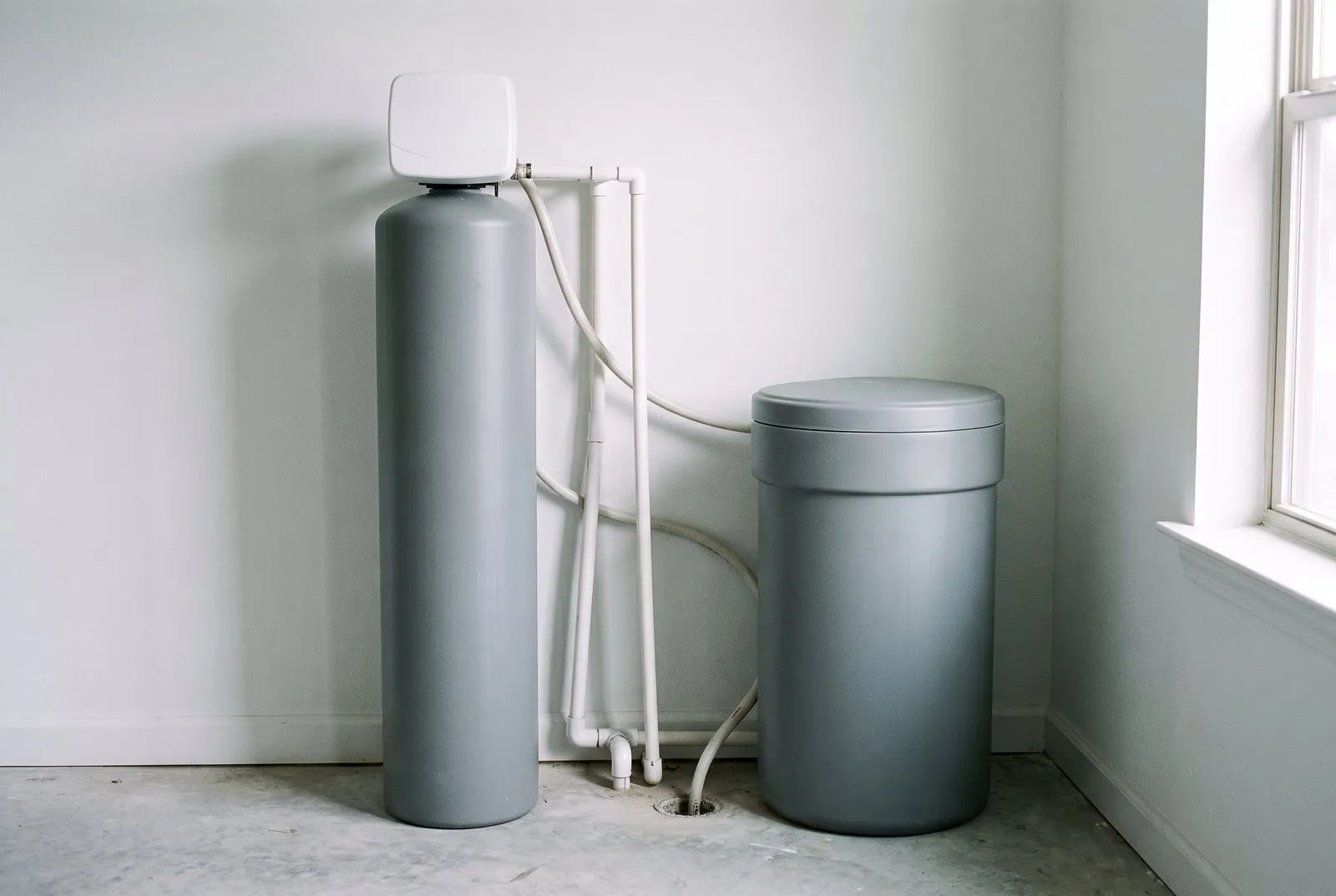
A softener holds a tank of resin beads. Hard water runs through the tank, and the beads trade their sodium for the calcium and magnesium in the water, a process called ion exchange. Over time the beads fill up with hardness minerals. The softener then regenerates: it flushes the resin with brine made from salt, washes the minerals down the drain, and starts over. That is the second tank you see beside the softener, the one that holds the salt.
A softener softens. It is not a filter, so it does not do anything about chlorine taste or smell. Plenty of homes end up with a softener and a carbon filter working together, each handling its own job, and the water test helps us tell you whether yours is one of them.
Whether you need one
Hardness varies from house to house, and some homes sit closer to the line than others. The in-home water test reads your hardness at the kitchen sink while you watch. If the number does not call for a softener, we will say so. If it does, we size the unit to that reading and to how many people use the water, so it regenerates when it should and not constantly.
Installation and upkeep
Licensed plumbers from Hargrave's Plumbing tie the softener into the main line, run a drain line for regeneration, and fit a bypass valve so water can be routed around the unit when it needs service. After that, the job is mostly salt. Check the brine tank now and then and add salt before it runs low. How quickly you go through it depends on your water and how much you use.
Questions
Water Softeners: common questions
Do I need a softener, a filter, or both?
A softener handles hardness. A filter handles things like chlorine taste and smell. Some homes need one, some both, and it depends on your water, which is why we test first.
Will a softener lower my water pressure?
An undersized softener can. Sizing the unit to your household's flow rate is how that is avoided, so we ask how your house uses water before choosing equipment.
Does soft water feel different?
Soap lathers more easily in softened water, and skin and hair often feel less dry or coated after a shower. Spots on glassware and scale on fixtures tend to ease off too.
Can a softener be used on a well?
Yes, though wells often have iron or sulfur to deal with as well, and that can change the equipment. The water test shows us what we are working with.
Book a free in-home water test first
The result tells us what your water needs, and what it does not. If it tests fine, we will tell you so.